
Velcro Wrap or Compression Stocking?
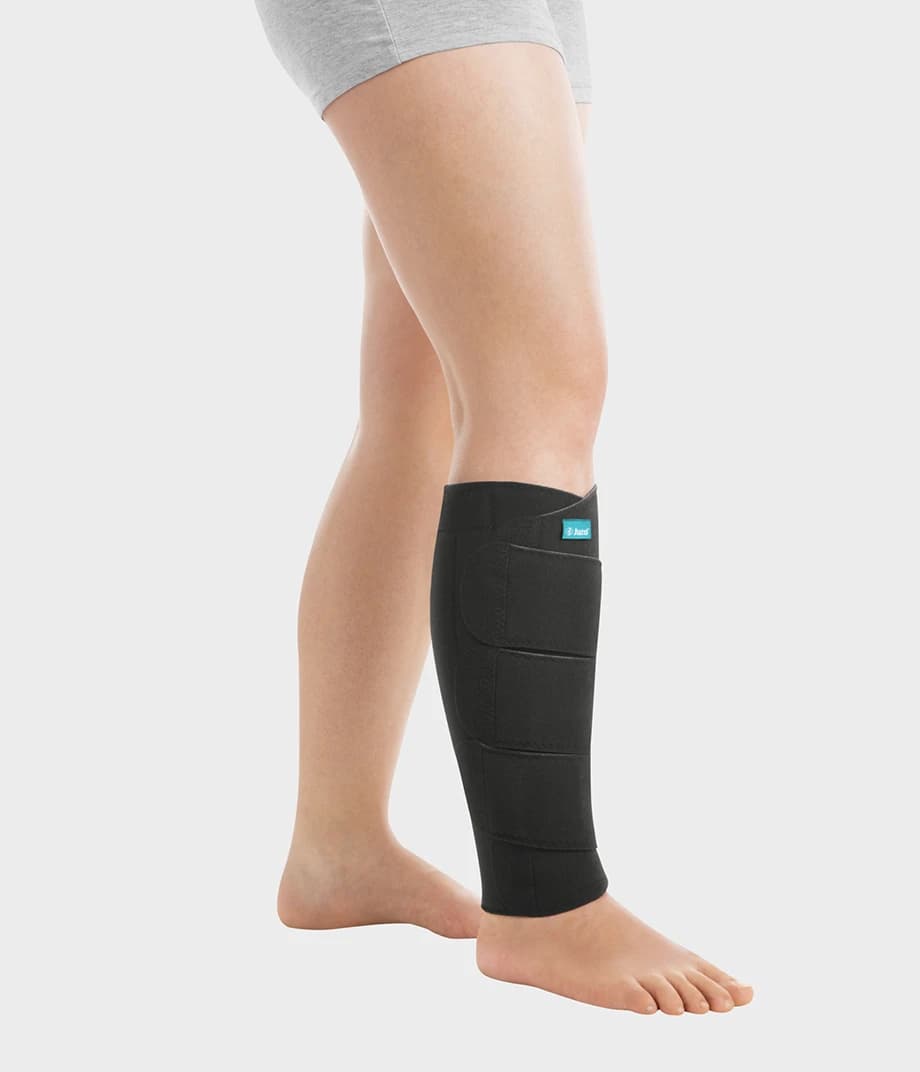
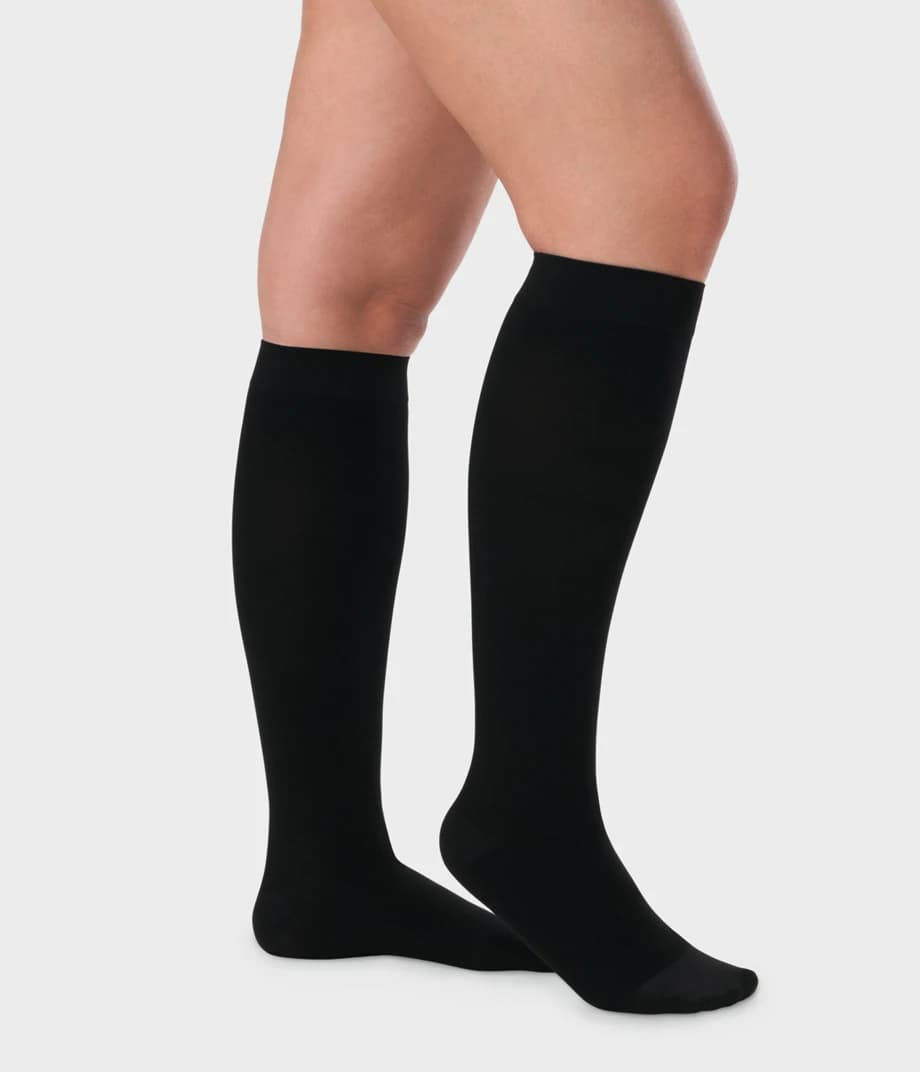
A stocking is thinner, cheaper and invisible. A wrap closes with Velcro, so weak hands manage it and it re-tightens as swelling falls.
Both deliver medical compression. The difference is how they get onto the limb and what happens when the limb changes shape — and for a lot of people that difference decides whether the treatment happens at all. A perfect stocking left in a drawer because nobody in the house can pull it on is not treatment.
Choose a wrap when
- Hands are the problem. Arthritis, weak grip, a painful shoulder, a limb you can only reach with one hand. A wrap is laid open around the leg and closed strap by strap; it needs far less pulling force than a knitted stocking.
- The swelling is still changing. In the first weeks of lymphoedema treatment, after a hospital stay, or when a limb reduces week by week, a stocking that fitted on Monday is loose by Friday. A wrap is re-tightened each morning — and again during the day as the limb reduces, which is exactly the point.
- The limb shape is irregular or large. Deep folds, a very wide calf, a limb outside the stock size chart. A wrap adapts where a knitted tube cannot.
- Somebody else is applying it. A spouse or a carer can learn a wrap in minutes, including the tension guides printed on many of them.
- Skin is fragile. Nothing has to be dragged over the skin.
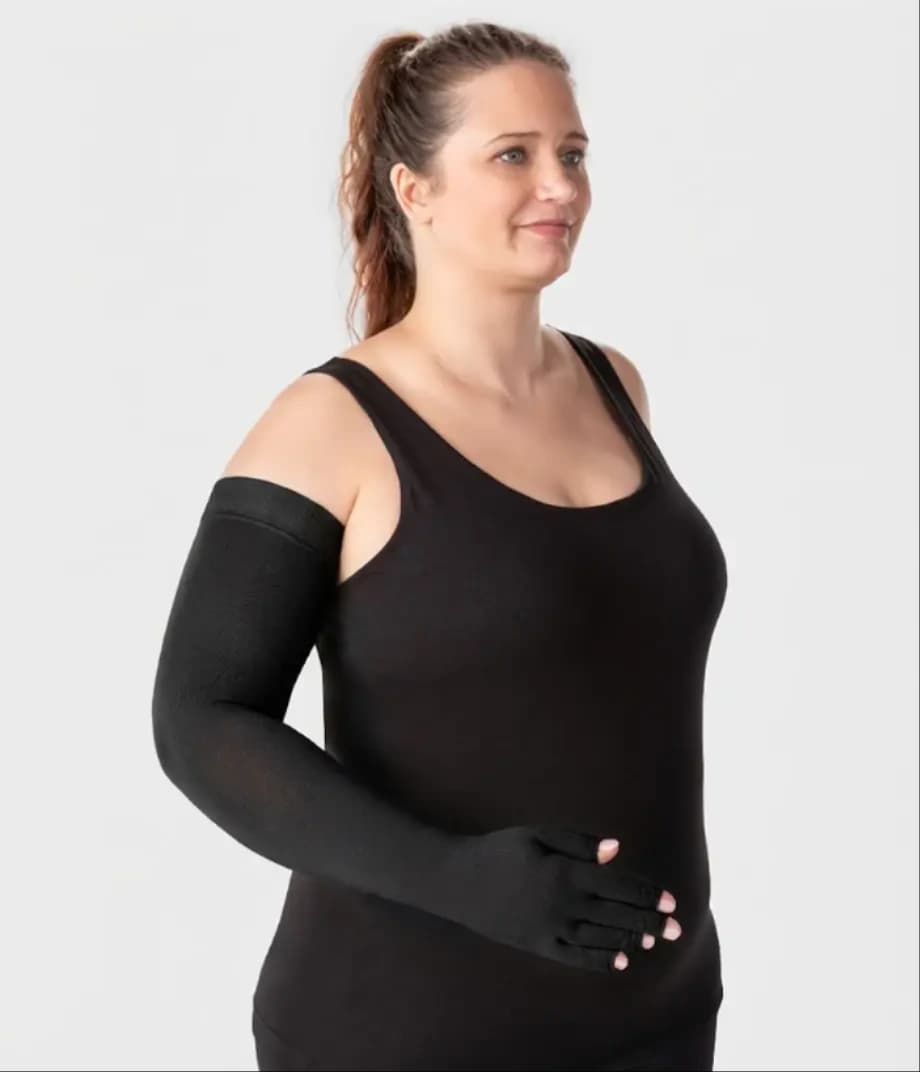
The adjustable wrap range is built in pieces so you only cover what needs covering: a calf wrap, a foot wrap, a knee or a thigh wrap, which combine when the whole leg is involved. The same idea exists for arms and hands.
Choose a knitted stocking when
- The limb is stable and has been for months. There is nothing to re-adjust.
- Discretion matters. A stocking disappears under trousers and into a shoe. A wrap is bulkier and generally needs a larger shoe or a sandal.
- You are on your feet all day. A knitted stocking is thinner, cooler and does not shift inside footwear.
- Cost. A stocking is usually the less expensive option, and you can own two and rotate them.
Most everyday venous problems — aching legs, varicose veins, swelling by evening — are stocking territory, and the vein care range is where to start.
You are often told to use both
It is common, and sensible, to wear a wrap at night or during a reduction phase and a stocking during the day once the limb is stable. It is also common to use a wrap during a flare and go back to the stocking afterwards. These are not competing products; they are the same treatment delivered in different ways, and a lymphoedema therapist will often prescribe exactly this combination.
If putting on a stocking is the only obstacle
Before giving up on a stocking you otherwise get on well with, try the aids. An easy-slide lets the stocking glide over the foot and heel instead of gripping it, the donning and doffing frame holds the garment open so you step into it, and a pair of grip gloves doubles the grip you can apply without damaging the knit with fingernails. Any of these is cheaper than switching system.
Who sets the pressure
A wrap can be pulled tighter than it should be — that is the trade-off for being adjustable. Many have tension guides printed into the straps so you close them to a marked overlap rather than by feel, and your therapist or doctor should tell you which level you are aiming for and in what order to close them. Too loose and it does nothing; too tight is genuinely dangerous on a leg with poor arterial circulation.
If you are weighing one against the other, tell us what the limb does during the day, who puts the garment on, and what you have been prescribed. Send it on WhatsApp and we will give you a straight answer, including when the answer is that you need neither of the two you were looking at.
Our certified specialists can guide you to the correct compression class and garment.
Talk to a specialistRelated articles
Comments
…