
The Compression Timeline After Liposuction
A firm first-stage garment, then a lighter second stage. Your surgeon sets the dates; here is what each stage is for and what to buy beforehand.
The short version: a firm first-stage garment worn almost continuously for the first weeks, then a lighter second-stage garment for a further stretch of weeks or months. The exact timing belongs to your surgeon — procedures, bodies and techniques differ, and the instructions you were given at discharge beat anything you read online, this page included.
What this article can do is explain what each stage is actually for, and what to have waiting at home before you go in. Buying a compression garment while swollen, sore and unable to bend comfortably is the worst possible time to be choosing a size.
Why compression after liposuction at all
Liposuction leaves spaces under the skin where fat was removed. Even, continuous pressure helps the tissue settle against the body rather than filling with fluid, limits swelling and bruising, and supports the skin while it retracts. It also, bluntly, makes moving around far more comfortable in the first week.
Stage one: the first weeks
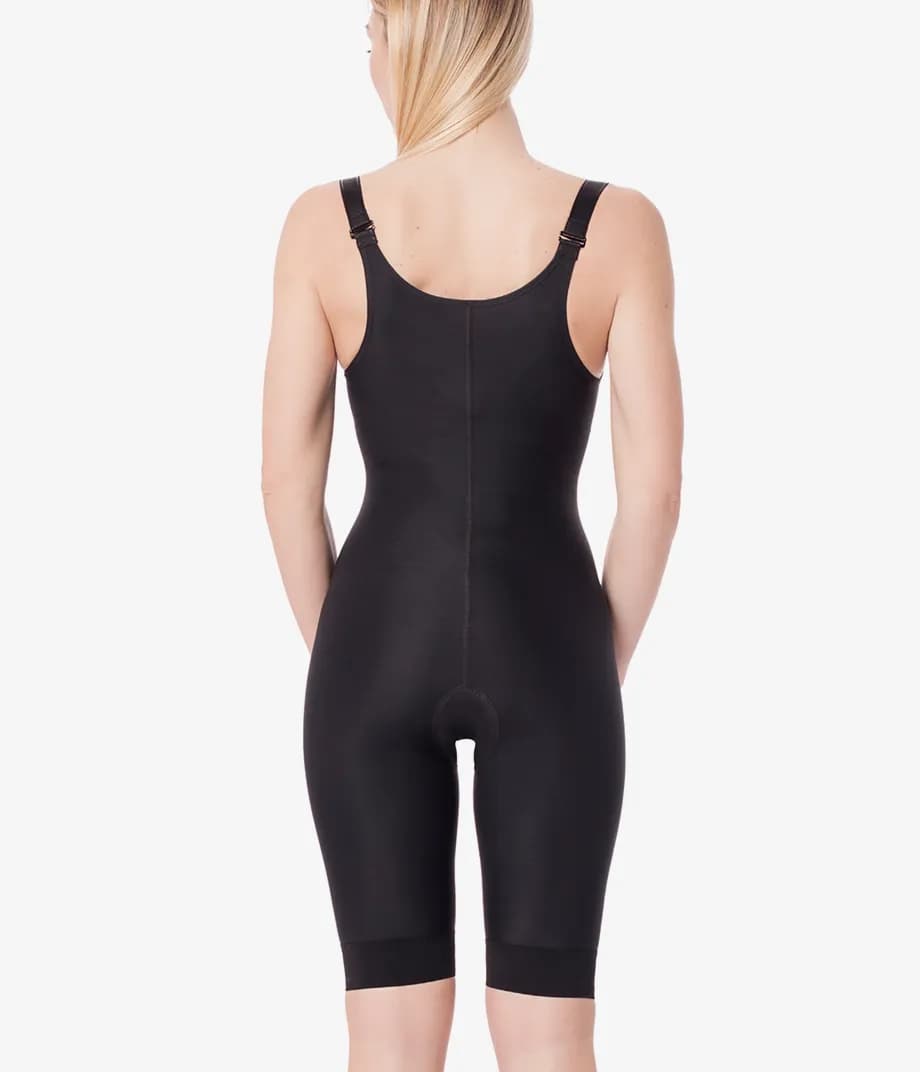
A first-stage garment is firm, closes with hooks or a zip so it can be done up without stretching it over your body, and is meant to be worn day and night apart from washing and showering. A bodysuit such as the 360 liposuction bodysuit covers the trunk and thighs in one piece, which matters when the treated areas wrap around you. Men's cuts exist for the same procedures — see the men's liposuction garments.
Two things make stage one work:
- Foam and pads underneath. Compression spreads unevenly over a body that is not flat, and the dips are where fibrosis and lumpiness form. Lipo foam sheets and shaped foam pads even the pressure out across the abdomen and flanks. Most surgeons here ask for them; if yours has not mentioned foam, ask.
- The right size on day one. You will be swollen. A garment chosen a size down "to be tight enough" rolls, digs in and creates the very creases it is supposed to prevent. The correct garment is firm and even, not painful, and leaves no deep marks when you take it off.
Stage two: weeks to months
Once the heaviest swelling has gone, the first garment becomes loose — that is the signal, not the calendar. A second-stage garment is lighter, lower-profile and wearable under normal clothes, and most people stay in one for a few more months, often only during the day by the end.
For abdominal procedures and tummy tucks the tummy tuck garments are cut higher and firmer across the waist; after a fat transfer to the buttocks the BBL garments leave the graft area free, which is not optional — pressure on a fresh graft is exactly what you are avoiding.
What to buy before surgery
- Two garments of the first stage, so one can be washed while the other is worn. This is the single most common thing people wish they had done.
- Foam or pads if your surgeon uses them.
- A measuring tape, and your measurements taken calmly a few days before the operation.
Delivery across Oman takes about five working days — 4 OMR anywhere, free over 50 OMR — so order a fortnight before the date, not the week of. If you are unsure between two sizes, send your measurements and your procedure to us on WhatsApp before ordering.
Living in it, in this climate
Wearing a full-coverage garment around the clock through a Gulf summer is the part nobody warns you about. What helps: a cotton vest under it if your surgeon allows, washing the garment daily in lukewarm water with a mild detergent, drying in the shade, and keeping the air conditioning on at night. Do not use fabric softener — it strips the elasticity out. And do not leave it off "just for a few hours" because of the heat in the first weeks; that is when swelling returns fastest.
When to call your surgeon
Compression should feel firm and supportive. Call your surgeon, not us, if you have numbness or pins and needles that do not settle when you adjust the garment, skin that is breaking down under a seam or a foam edge, increasing rather than decreasing pain, a fever, a wound that opens or discharges, or swelling in one leg with calf pain. A garment is never the fix for any of those.
Everything described here sits in the post-surgery recovery section of the shop, split by procedure and by who it is cut for.
Our certified specialists can guide you to the correct compression class and garment.
Talk to a specialistRelated articles
Comments
…