
Measuring Yourself for a Compression Garment
Compression is sized in centimetres, taken in the morning. Where to put the tape for legs, arms and trunk, and what to do between two sizes.
Compression only works if it fits. A garment that is slightly too big delivers less pressure than it claims; one that is too small rolls, digs in, cuts at the top band and can do real harm on fragile skin. Since you cannot walk into a fitting room to try one on here, the measurements you take at home are the fitting — so it is worth ten careful minutes.
Three rules before you pick up the tape
- Measure in the morning. Within half an hour of getting up, before limbs have filled through the day. Measurements taken at nine at night will size you into a garment that is too loose every morning after.
- Snug, not tight. The tape should sit flat against the skin and stay horizontal, without denting it. If the tape leaves a mark, you are pulling.
- Both sides, every time. Arms and legs are rarely identical, and the garment is sized per limb. Write both columns down.
Use a soft tailor's tape, stand or sit as described below rather than bending to reach, and have someone help with the longer measurements if you can. Write everything in centimetres.
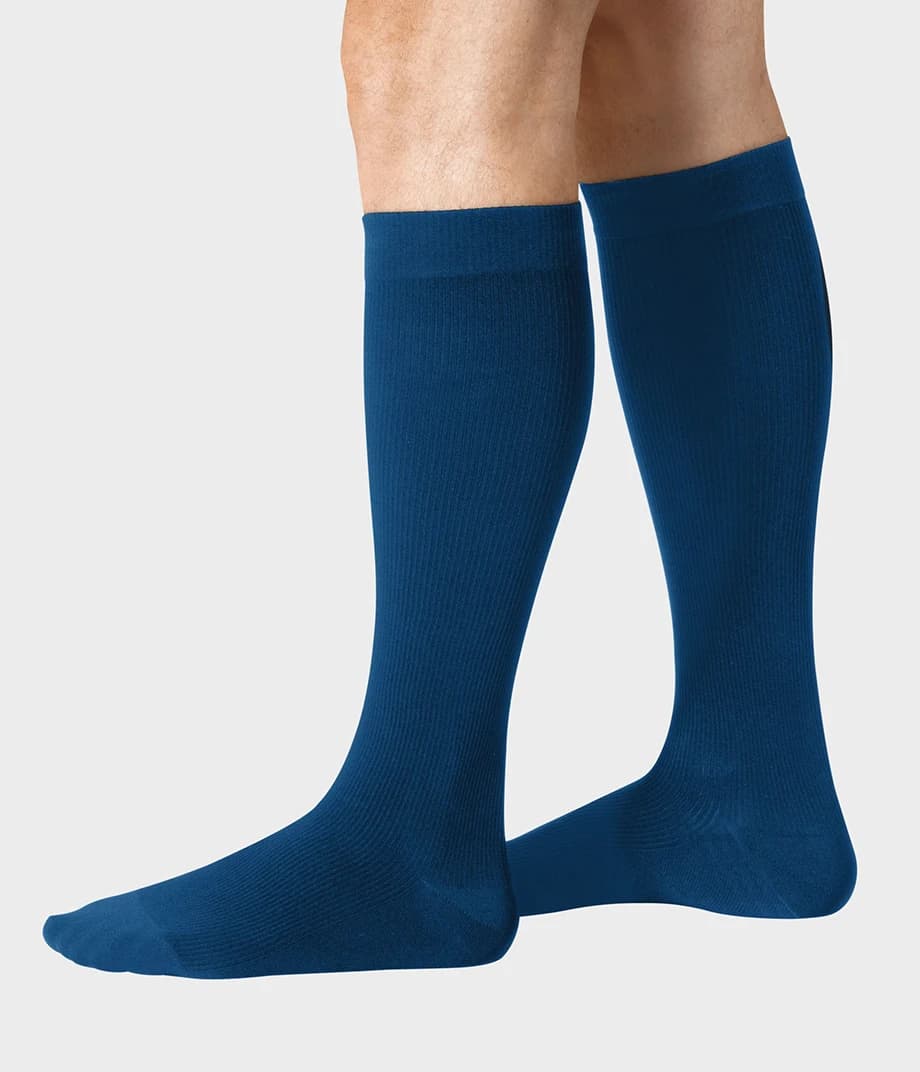
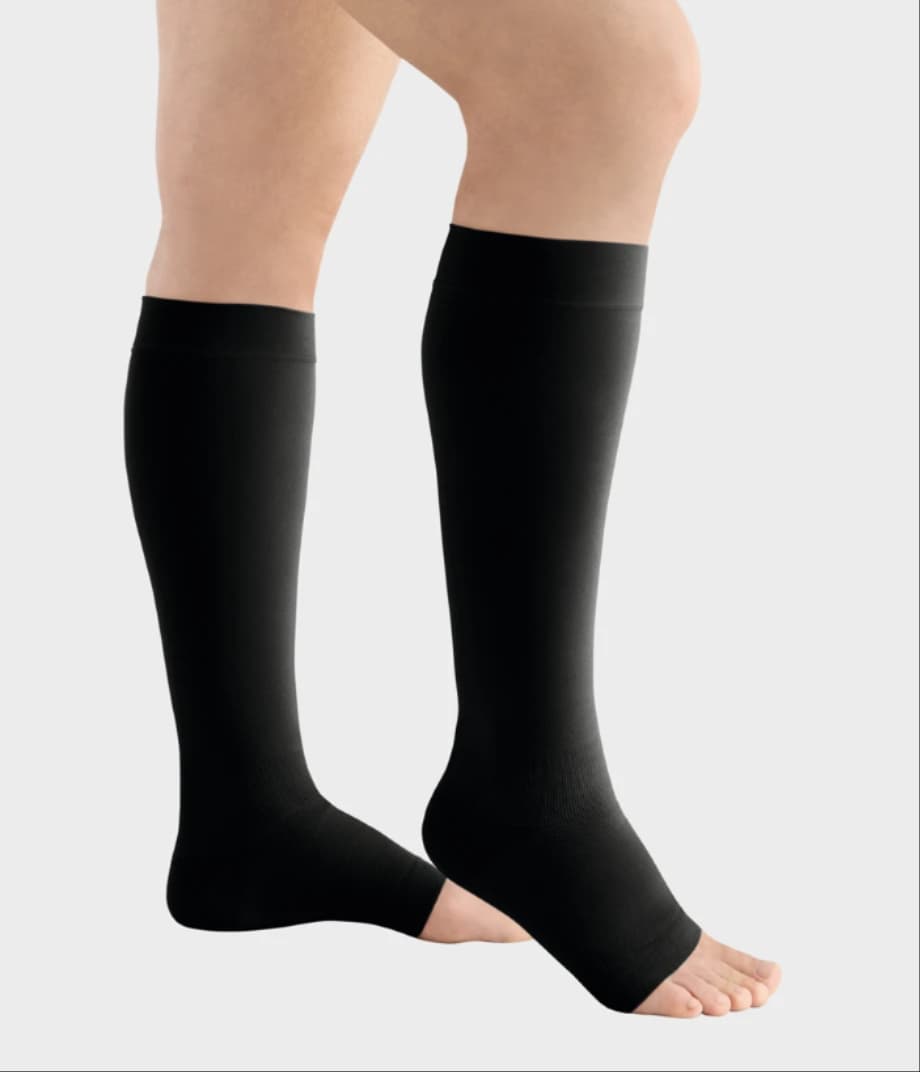
Legs: below-knee and thigh-high
- cB — ankle: the narrowest point of the leg, just above the ankle bone. This is the single most important number on the chart.
- cC — calf: the widest point of the calf.
- cD — below the knee: just under the knee bend, about two fingers down.
- Length A-D: from the floor to the bend behind the knee, sitting with the knee at a right angle and the foot flat.
For a thigh-high you also need cG, the thigh at its widest just below the buttock, and the length from floor to that point, measured standing. If a thigh measurement is near the top of the chart, say so when you order — a thigh-high that will not stay up is the most common disappointment in compression, and it is usually a sizing problem, not a product problem. The vein care range lists the chart for every stocking.
Arms and hands
- cA — wrist: the narrowest point above the wrist bone.
- cC — forearm: the widest point of the forearm.
- cG — upper arm: the widest point, just below the armpit.
- Length: from the wrist crease to the armpit, arm relaxed and slightly bent.
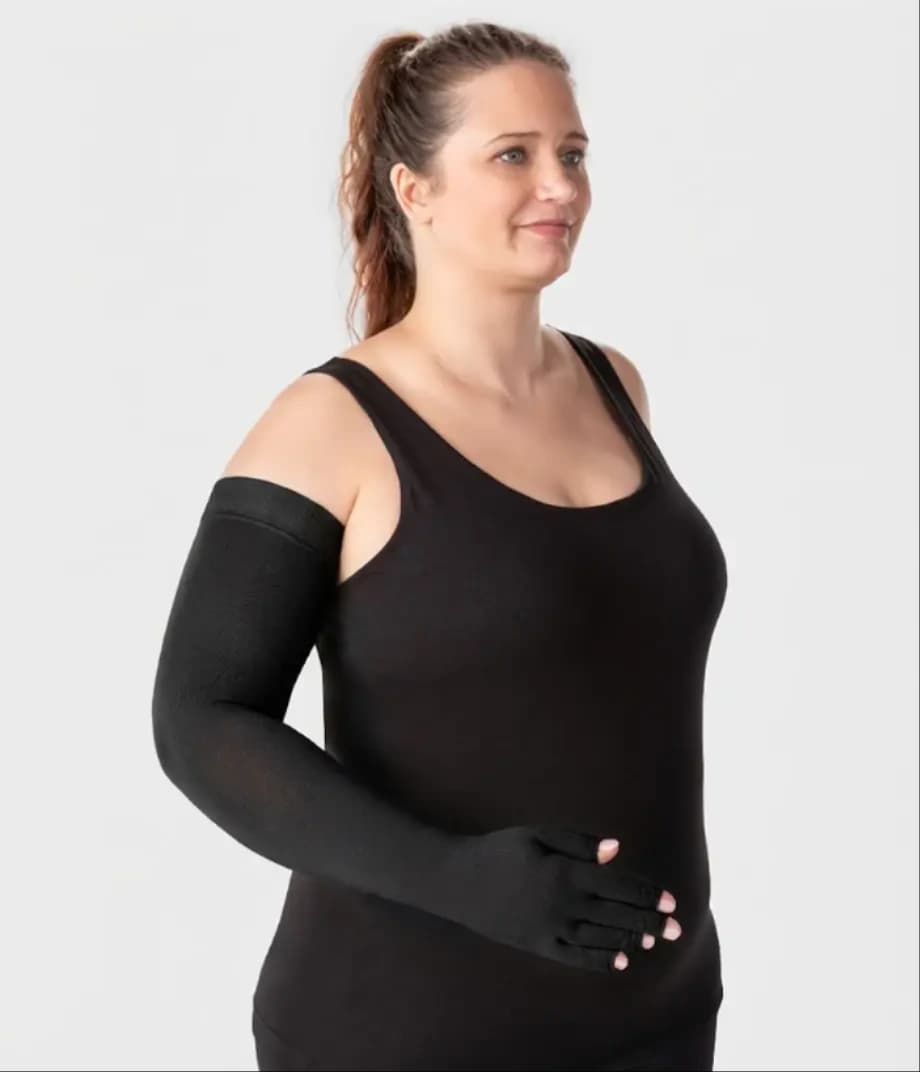
If a sleeve is for lymphoedema after breast surgery, your therapist should be the one who decides the class and whether a glove or gauntlet goes with it — a sleeve alone can push fluid into an unsupported hand. Sleeve-and-glove combinations such as the seamless arm sleeve with glove exist for that reason, and the full range is under arm sleeves and gloves.
Trunk garments after surgery
For bodysuits, binders and bras, the chart usually asks for the underbust, the waist at the navel, and the hips at their widest, measured standing and breathing normally — not holding your stomach in. Measure before the operation if you can. If you are already swollen, say so when you send the numbers, because that changes which size is the right one to start in.
When you fall between two sizes
This happens often and the answer is not automatic:
- If the ankle measurement sits in one size and the calf in the next, the ankle normally decides for a stocking — but check with us, because it depends on the model.
- If one leg or arm is a size apart from the other, you may simply need two different sizes. That is normal and is better than compromising on both.
- If a measurement sits outside the chart altogether, a stock garment is not going to fit, and the right answer is a conversation with your therapist about a made-to-measure one rather than squeezing into the largest stock size.
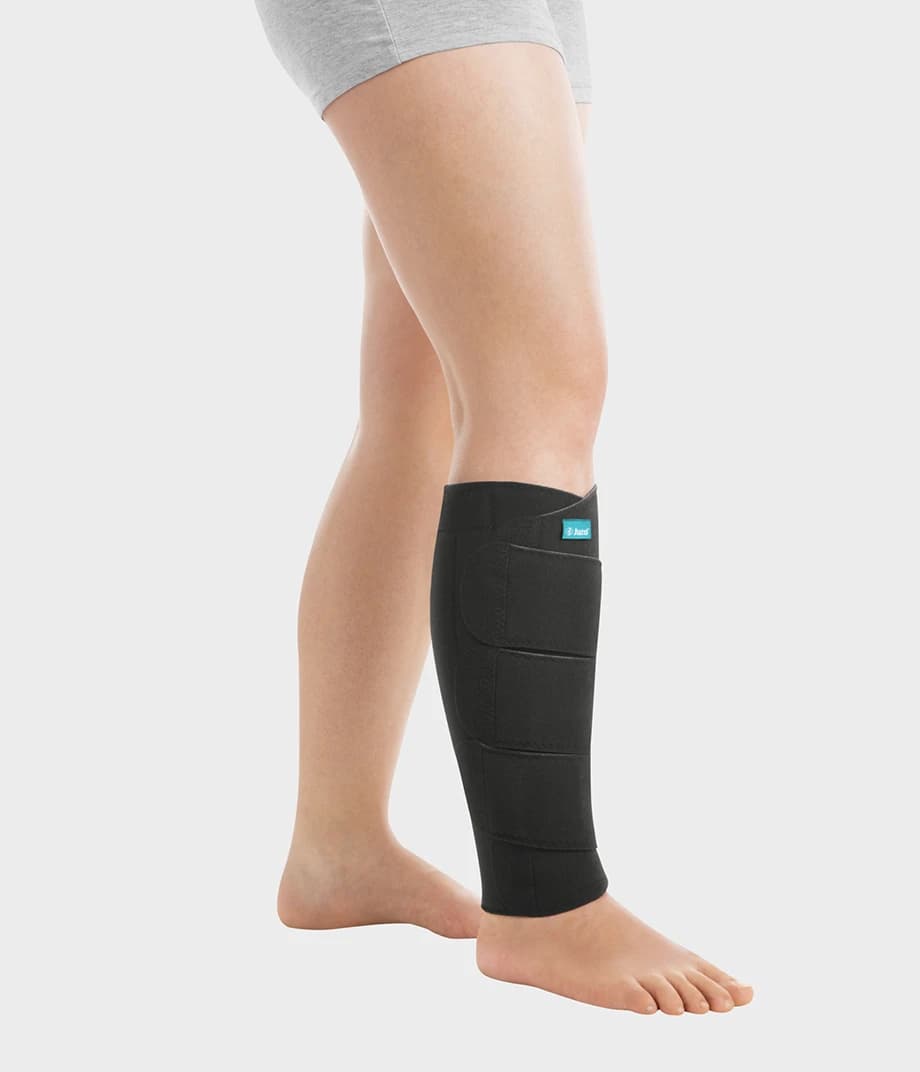
In the meantime, an adjustable wrap is often the practical option — a calf wrap closes with Velcro over whatever shape the limb is today, which is also why wraps are used while swelling is still changing week to week, and by anyone whose hands struggle with a knitted stocking.
Send us the numbers before you order
Write your measurements down, photograph the list, and send it on WhatsApp with the garment you are looking at and what it is for. We will check them against the manufacturer's chart and tell you the size — or tell you honestly that nothing in stock will fit, which is more useful than a parcel that goes back. Delivery is 4 OMR anywhere in Oman, free over 50 OMR, and usually arrives within five working days.
Our certified specialists can guide you to the correct compression class and garment.
Talk to a specialistRelated articles
Comments
…