
Looking After Your Legs on a Long Pilgrimage
Days of walking, long standing and heat make legs swell. A class 1 below-knee stocking handles most of it; planning around wudu handles the rest.
Umrah is physically a long day repeated several times over. Hours of walking on hard polished floors, long periods standing, heat, crowds that make it hard to sit down, and very little opportunity to put your feet up. Ankles swell, calves ache, and people who have never had a problem with their legs come home surprised at how swollen they were.
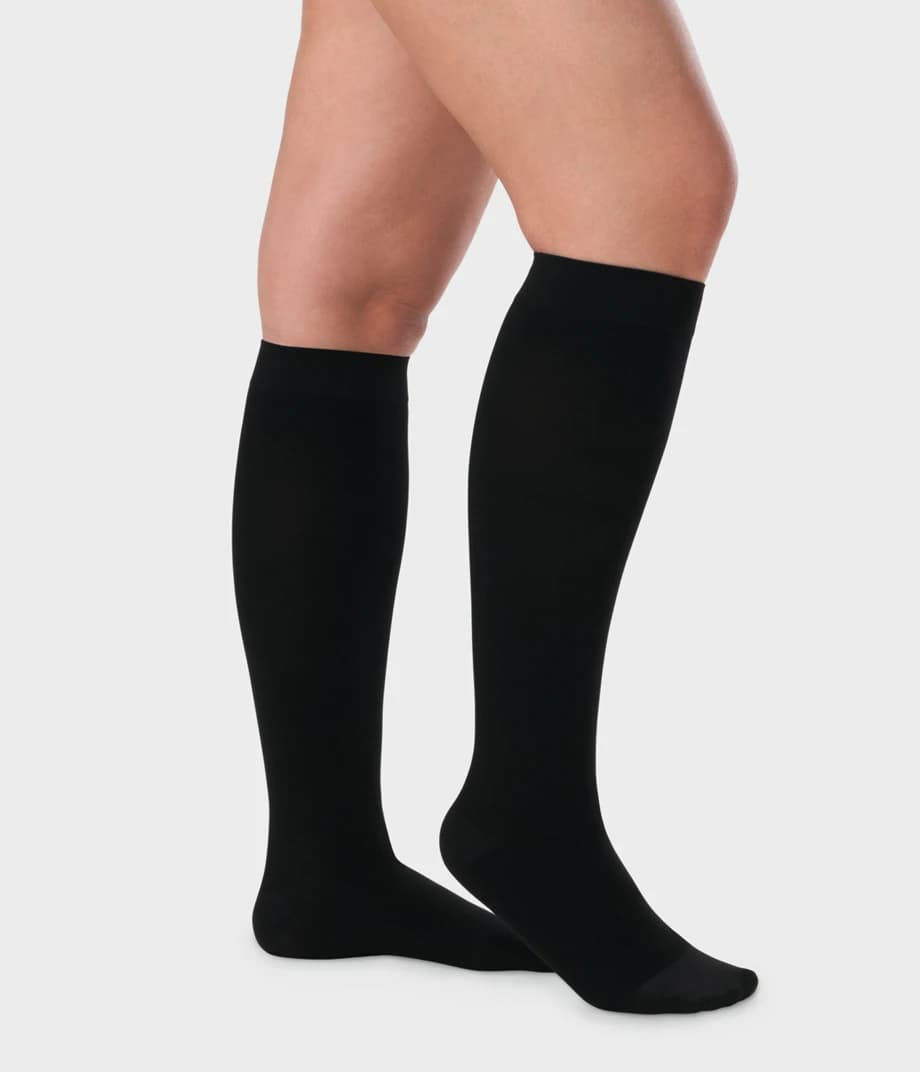
A class 1 below-knee compression stocking, put on in the morning before you set out, prevents most of it. It is the same principle as a long flight: your calf muscles move blood back up your legs, and when they are either working non-stop or barely moving, they need help.
Plan around ablution, not against it
This is the practical detail that decides whether you actually keep the stockings on. You will be removing and replacing them several times a day for wudu, and a garment that takes five minutes and both hands to pull on will be abandoned by the second day.
- Below-knee, not thigh-high or tights. Quicker off, quicker on, cooler, and enough for leg fatigue and ankle swelling.
- Keep a small towel in your bag and dry your legs and feet completely before putting the stocking back on. A compression knit pulled over damp skin is a struggle, and damp fabric against skin all day in heat is how irritation starts.
- Take a donning aid. An easy-slide weighs almost nothing in a bag and turns the job into a few seconds. It is the single most useful thing to pack with the stockings.
- Take two pairs. One to wear, one drying in the room. Wash them each evening in lukewarm water, with no fabric softener, and hang them in the shade of the bathroom rather than in direct sun.
Closed toe or open toe?
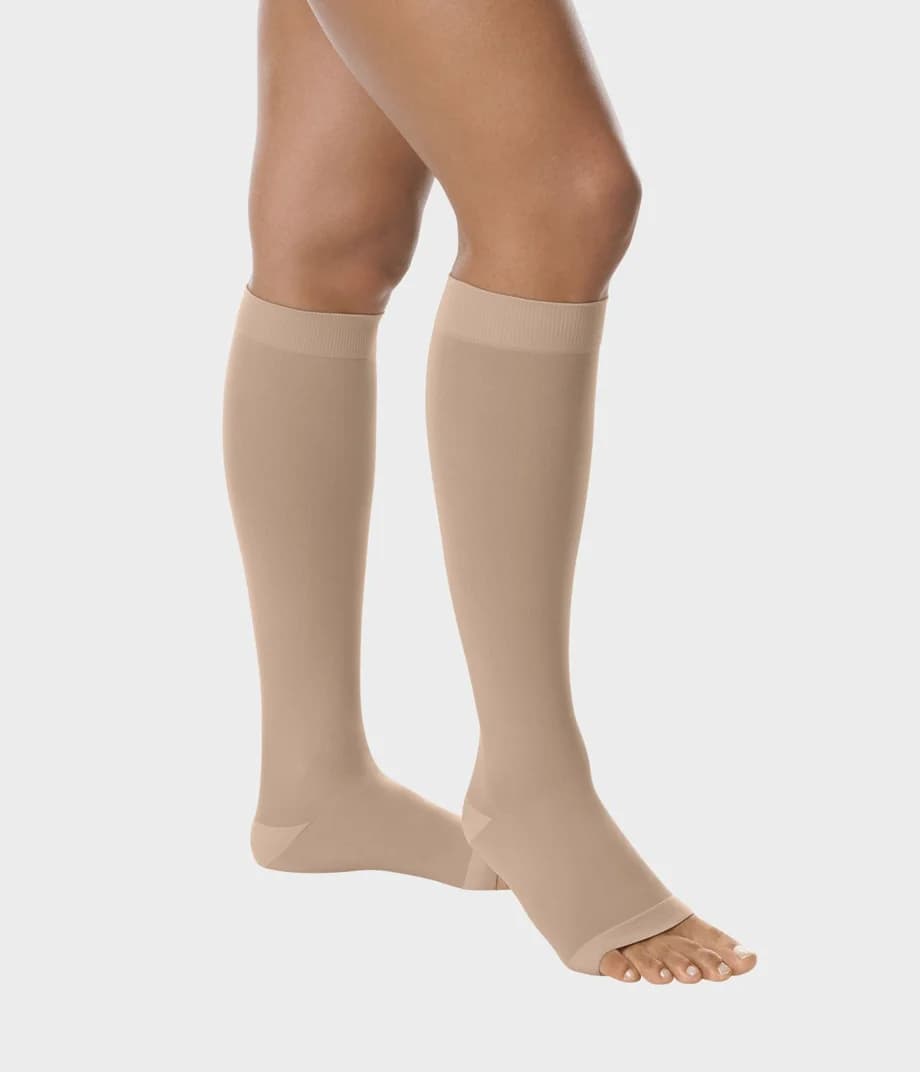
Either works. A closed-toe knit such as the Dynamic Cotton below-knee stocking is the better choice if you will be in shoes and socks most of the day, and the cotton content is kinder when you are warm for hours. An open-toe stocking is cooler and easier to get on, and it is the usual recommendation if your feet swell or your toes are sensitive. Both are simple everyday knits — see the basic everyday range.
Through the day
- Put them on first thing, before standing around in the hotel room — legs are at their thinnest then.
- Drink water steadily. Dehydration in the heat makes everything worse, legs included.
- Flex your ankles whenever you are standing still in one place. Even a dozen slow lifts onto the balls of your feet moves blood.
- When you do get back to the room, lie down for ten minutes with your feet raised on a pillow. This is more effective than it sounds.
- Comfortable, broken-in footwear. New sandals plus marble floors is a two-day mistake.
If you are already being treated for your legs
If you wear compression for varicose veins, lymphoedema or after a clot, do not drop the class you were prescribed for a lighter travel one just because it is easier to put on. Take the garment you were given, take a spare, and take the donning aid. If you are not sure the pair you own is still working — it goes on too easily, slides down, or your legs feel the same with or without it — replace it before you travel, not after.
The flight is its own problem
Keep the stockings on for the journey itself. Everything about a long flight that swells legs is covered separately in our guide to flight socks.
When it is not just tired legs
Swelling in both legs that settles overnight is ordinary after days like these. Swelling in one leg with calf pain, warmth or redness is not, and needs medical attention the same day — especially after a flight. Chest pain or breathlessness with it is an emergency. Nobody should be walking that off.
Order a week or two before you travel so you have time to try the size at home. Delivery across Oman is 4 OMR, free over 50 OMR, usually within five working days — and if you want the size checked against your measurements first, send them to us on WhatsApp.
Our certified specialists can guide you to the correct compression class and garment.
Talk to a specialistRelated articles
Comments
…